Stepping Away from “The Grind”: Skiing, Climbing & Family Fun

February 21st, 2010

The importance of taking a mental break from “the grind” (I always hated that expression since nothing in your life should feel like “a grind”, but use it since it illustrates the point well) shouldn’t be overlooked.  Often times we get caught up on our every day routine– including our dedication to our training– that sometimes we forget to take a step back and spend some time doing other things.  I always recommend making sure you build in quality active recovery into your training and your life.  Active recovery doesn’t just mean giving your body a chance to recover, but also your mind.  Giving yourself a mental break during the course of your training is absolutely critical in keeping you fresh and energized for continuing to build for future performance. 

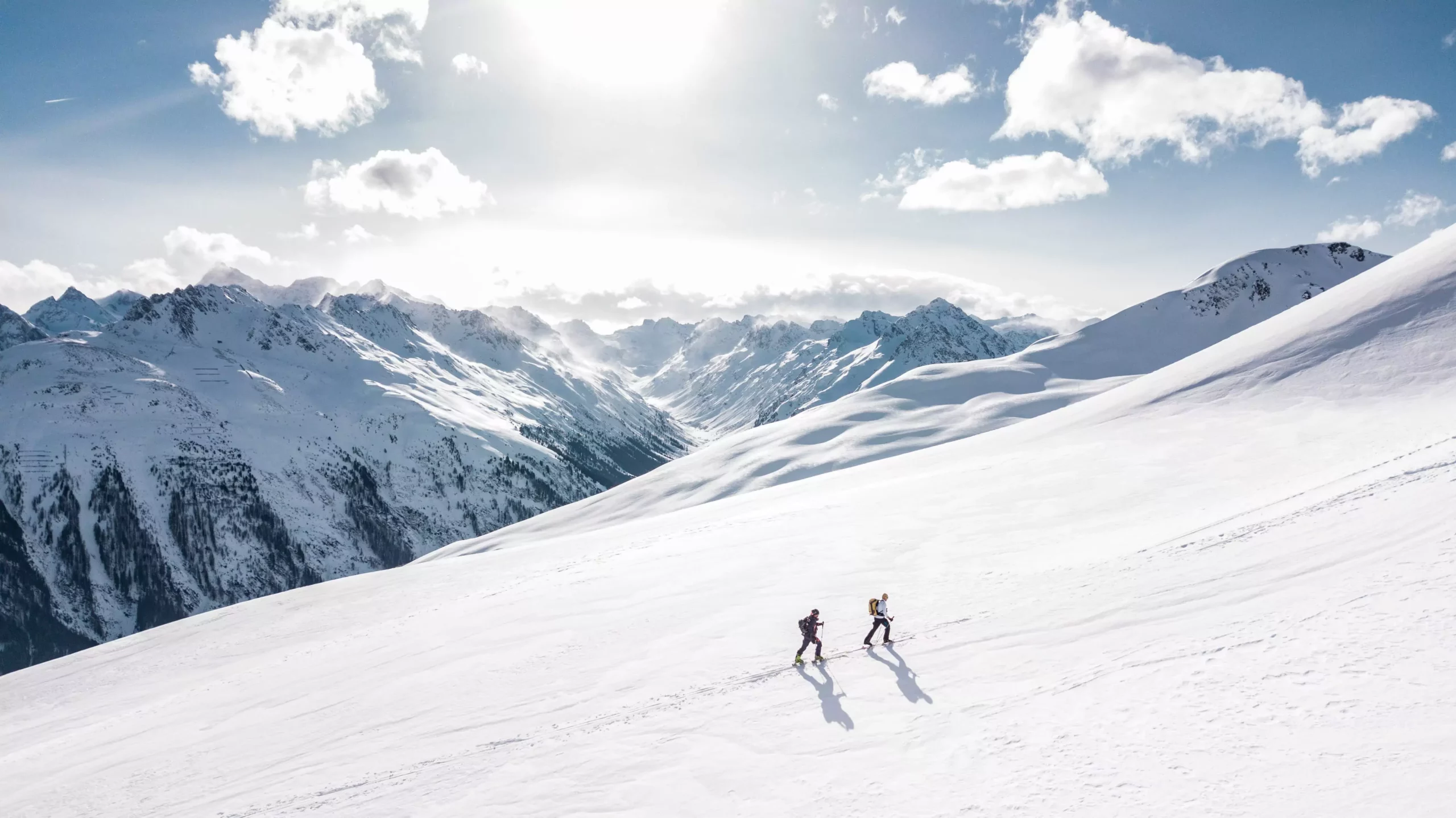
This past week, I took a bit of time away from my usual routine and spent a week in the White Mountains of New Hamsphire skate sking, downhill skiing and ice climbing with some friends I haven’t seen in a while and my family.   In fact, the best part of the whole week was getting my 4 year old and 2 year old on skis (both nordic and alpine) for the first time — the  big smiles they had on their faces the whole time was most rewarding to see as a dad (especially a dad who has high athletic hopes for his kids!).   Here’s a funny video of my two year old, Marco, enjoying his first time ever on skis:

As I always like to tell my athlete’s:  retain the playful outlook and ambition of a kid and you can do anything!

I did manage to get 4 days of skiing and 3 days of ice climbing in– a great way to vary up my training from the normal swim, bike, and running I do the rest of the time.  Skate ski conditions were absolutely fantastic at Bretton Woods (it never seems to stop snowing there), but alpine conditions left a lot to be desired at Black Mountain (lack of snow and warm temps definitely took their toll). 

The ice conditions, however, were fantastic.   One day of ice was spent on Silver Cascade, a relatively easy 4-5 pitch alpine climb in Crawford Notch.  Normally it’s not possible to climb the ice in Silver Cascade due to sheer volume of snow, but we hit the conditions just right with little snow, so we went for it. Here’s a glimpse of the start of the climb:

The rest of the week I reconnected with some ice climbing partners that I hadn’t seen in a while and got some steeper routes in. Cave Route in Frank’s Amphitheater was fat, so Frank Ferucci, Paul Segal and I jumped on that.

Gary on Cave Route

Gary on Cave Route

Finally, towards the end of the week, Paul and I hooked up with Laura Russo and Ed Medina (who I hadn’t climbed with since 2002 or so– hard to believe), both of whom were getting on ice for the first time of the season.  Champney Falls (a large waterfall gorge off of New Hampshire’s famous Kancamagus Highway) seemed to be the best place to go to get their legs under them and to work on some more vertical ice to help build up strength.  We had a great day climbing for several hours, ascending several hundred vertical feet of grade 4 to 4+ ice.  Good news: Laura and Ed had a great time and I could feel myself getting stronger as the day progressed– all in all, my strongest day out for the season.
I’m looking forward to getting more skiing and climbing in as the waning days of the winter approach.  Late February and March, with the longer days and deep frozen conditions, represent some of the best days of the winter to be out.  Get out and climb, hike, ski or do whatever sport that you enjoy and that allows you to take a step back from your normal routine.  You’ll feel re-energized and ready to continue to take your training to the next level.

Ascending Athlete #7: Marek L. Biestek

February 6th, 2010

I’ve started a series called “Ascending Athletes”, which features people achieving great things in their lives and/or impacting the lives of others through athletics.   I’m featuring athletes of all backgrounds, sports and skill levels.   Everyone has a story to tell– whether a recreational or beginner just starting to work out or a hardcore athlete who is competing at an elite level.   The goal of the Ascending Athlete series is to capture these stories and inspire others to seek similar challenges and rewards.   If you would like to share your story or would like to nominate someone as an Ascending Athlete, please let me know.  For more information about Ascend Sports Conditioning, visit our website.

Marek L. Biestek

Marek Biestek

Marek flying high

I met Marek L. Biestek through Jessica Valenzuela and the auspices of the social media networks. Marek is yet another great example of an Ascending Athlete taking his athletics to the next level through kiteboarding, as demonstrated through his kiting adventures and avid support for Just Kite It dot com, a content website and community dedicated to the kiting lifestyle, launched on January 13, 2010.  Marek is also the General Manager and Principal of a startup hedgefund in New York  City, MSMB Capital Management LLC.

Marek was kind enough to answer a few questions and help explain what makes him an Ascending Athlete:

Why are athletics important to you?

Fitness has always been important to me since my mid-teens.  I think everyone knows or at least accepts the fact that athletics has a positive impact on one’s life mentally, physically and emotionally.  Getting a great workout in, whether it’s at the gym, or an outdoor individual/team sport is very rewarding at the end of the day.  It helps you get a great night of sleep, feel better about the physical shape you are in and makes you feel successful in different ways than a career and money do.  Some people are happy with a sedentary lifestyle, but I can’t comprehend how sitting in front of a television and snacking could be enjoyable when there is wind and snow to tend to outside.  Staying athletic during your life will also extend your enjoyable life by many years, make you happier, and keep you on less on those pharmaceutical grade supplements your doctor might otherwise recommend.

What sports do you participate in?

I have been snowboarding for probably seven to eight years and kiteboarding for almost three.  I was very much into mountain biking for at least a decade but less so in the past five years.  I enjoy running and weightlifting at the gym when I can’t get out to something more active.

 
What is your major athletic goal(s)and/or events you are participating in for this year?  Why have you chosen this goal(s)?

My main goal for this year is progressing at kiteboarding to an expert level.  I’d like to start to comfortably doing kiteloops and riding unhooked and doing unhooked tricks.  I love the sport and would like to maximize my potential while doing it.  It is easy to get complacent in terms of progression at any sport once you are over the learning curve.  When you begin learning kiteboarding, you are forced to try to get up on the board and ride with many failures in between.  Once you have acquired riding skills, the push to get to the next level doesn’t feel as pressing as you aren’t constantly failing.  I sometimes have trouble with hesitation and taking things to the next level.  Imperfect riding conditions in my area do not make it easy to progress, but they are a challenge rather than an impasse.  My secondary goal is to begin training for a distance running event, beginning with a half marathon, eventually leading up to a full marathon within the next 1-2 years. 

What are some future goal(s) or event(s) you’d like to participate in?

My future goal at some point is to complete and Ironman.  It will take some great challenges in terms of training and time management but it will happen somehow.  I intend to start small with some half-marathons, then marathons, triathlons, etc.  Once I can complete a marathon in 3 hours I will continue to raise the stakes, and hopefully this happens within 3 years from now.  If I happen to progress in kiteboarding much more rapidly than I think I can, I would love to enter some sort of amateur competition, perhaps something local.

 
Marek always seems to be flying!

What impact has your athletics had on the lives of others?When someone accuses me of not being able to sit still and it is in reference to sports, I take it as a compliment.  The direct impact of my athletics on some of my friends has been their conversion into the same passions I share.  I have never been a kiteboarding, or snowboarding instructor but I have mentored some of my friends when it comes to these sports.  It is a nice feeling to be asked, “When are we going snowboarding (kiteboarding)?” after it was me who was the first to ask them “When will you try snowboarding (kiteboarding)?”


Sports have also had a positive impact in the people around me in terms of motivating them to be more active in their lives.  Sometimes it’s not anything they may say, but small changes that you notice in the way they behave around you.  It may be as simple as talking about it or actually enjoying a sport that they before did not really think was for them.

Name one interesting fact or story that makes you unique and interesting

Ever since I was little I was a thinker and a problem solver (maybe more of a problem creator at first).  I always was curious about figuring out how the world worked.  For example, whenever I received any new toy as a child, instead of playing with it, I picked up a screwdriver and I took it apart to figure out how every little piece inside fit together to make the package work.  My room looked like a five year old’s mechanics garage.  Anything new and exciting grabbed my attention and still does to this day.  For some reason when the automatic transmission failed in my car a few years ago, I refused to have a mechanic fix it and instead I got a hold of all the parts required for a manual transmission that I retrofitted into my car in 25 degree weather in the middle of the winter in my yard (which I eventually broke and I had to fix as well, luckily in the summer).  I guess some people might think that is a little extreme (especially my neighbors with me making noise at 3am outside) but despite the cold weather, I found the challenge quite fun and a few weeks later one of my friends had me convert his transmission from automatic to manual. 

Kiteboarding and snowboarding are an extension to me of my own curious personality to the partially adrenaline driven interest of pushing myself to the edge of what I can do.  It’s about being in control and making a calculated bet on the next decision, whether it’s approaching a jump on the snow or kiting in 40 knot winds, knowing that majority of people out there would not be comfortable doing such things…outside of course…us kiters and snowboarders…

Thanks to Marek for his spirit of adventure and for sharing his story!

To learn more about Ascend Sports Conditioning, our mission, focus and dedication to helping people ascend to new levels through athletics,  please visit www.ascendsportsconditioning.com

Ascending Athlete #6: Nate Furman

January 19th, 2010

I’ve started a series called “Ascending Athletes”, which features people achieving great things in their lives and/or impacting the lives of others through athletics.   I’m featuring athletes of all backgrounds, sports and skill levels.   Everyone has a story to tell– whether a recreational or beginner just starting to work out or a hardcore athlete who is competing at an elite level.   The goal of the Ascending Athlete series is to capture these stories and inspire others to seek similar challenges and rewards.   If you would like to share your story or would like to nominate someone as an Ascending Athlete, please let me know.  For more information about Ascend Sports Conditioning, visit our website.

Nate is his favorite place in the world- hanging mountainside.

Nate in his favorite place in the world- hanging mountainside.

Nate Furman

Adventure is a way of thinking and a state of mind.  It’s about leaving your cell phone behind, loading up your pack and heading out in the wilderness for mental and physical challenges and an opportunity to connect with the outdoors and share those experiences with others.  It’s also about keeping that magic connection  alive and well in your everyday, “real”  life upon your return from your adventure.  Very few people have the opportunity to make adventure their life pursuit.  Nate Furman is one of those people.  Nate is a Professor at Green Mountain College in Vermont where he teaches outdoor education and actively pursues his own outdoor adventures.   I met Nate through ASC, when he reached out to me to help him take his performance to the next level and to  make some of his athletic goals a reality.  Nate is one of those athletes you just sit back and say “wow” to what he’s accomplished already and what he hopes to do.   From competitive mountain biker to hardcore climber to passionate educator who inspires others, Nate epitomizes adventure and what it means to be an Ascending Athlete.

Nate was kind enough to answer a few questions and help explain what makes him an Ascending Athlete:

Why are athletics important to you?

Because doing stuff outside is awesome!!!!!  Athletics are one of the few things that combine challenge with bliss.   I mean, my work is challenging but only rarely is it blissful.  Visiting my family out in California is awesome, but as long as we don’t talk politics it’s not that challenging.  Athletics, on the other hand, is right on the intersection of joy and challenge.  It’s so much fun and it’s so hard.  Athletics have been a place where I’ve been able to establish relationships, and maintain those relationships meaningfully.  For me, the social circle gained through athletic participation has always been the most important social circle I’m involved in.  It’s the place that inspires me to challenge myself.

In addition, the memories I have of athletics are etched into my brain so much deeper than other memories.  I can barely remember the time I graduated college despite the pomp and circumstance.  But I can easily recall any of the mountain bike races I’ve ever competed in; how I was feeling, what place I came in, who I competed with, etc.

So for me, getting the best out of life means getting after it through athletic pursuit…and probably not on a treadmill.

What sports do you participate in?
My favorite place on the planet is hanging from a hand jam, looking up at the sky and then the glacier below.  I’m fairly addicted to rock climbing; mountaineering and ice climbing are pretty fun, too.  The adventure and camaraderie that’s in it is just so much fun.

Climbing expeditions have taken me to Alaska, Peru, Canada, Greenland, Chile, Argentina, and now Vermont!  Climbing is a great way to see the world; you get to meet people who are incredibly passionate and about the same thing that you are, and often become instant friends despite language barriers.  I’ve climbed with Germans, Japanese, Brazilians, French, Swedes, Peruvians, Chileans, Argentineans, Indians, Thai, Nepalese, Australians, and some folks from a small island off the coast of Europe…I think they call themselves British.  The opportunity to share stories (if we can communicate) or just each other’s company is a wonderful way to experience people from different cultures.

I dabble in a bunch of different sports.  I was a fairly competent cyclist back-in-the-day, and still love to go for long rides with my wife, either on roads or trails.  We participate in races from time to time, most recently the Hampshire 100.  I tend to participate in activities that my friends like, so depending on the day and the partner, that might be skiing, running, or kayaking.

What is your major athletic goal(s)and/or events you are participating in this year (2010)?  Why have you chosen this goal(s)?

I’m hoping to pass the AMGA Rock Guide Exam in Red Rocks this April.  It’s a five day test where examiners assess your technical guiding abilities.  I hope that I can get in good enough shape so that the physical challenge isn’t all that challenging.

I’m toying with the idea of doing a triathlon in the Fall.  We’ll see what Gary thinks.

But mostly, what I really hope to accomplish, is to climb the Nose on El Capitan (VI, 5.10, C2) and the Regular Northwest Face route on Half Dome (VI, 5.10, C1) in a day in June of 2011.  I love climbing long, classic routes, and enjoy doing them in a day.  It’s so much fun stepping up to a long route with some water, some food, a rain jacket, climbing gear, and going for it.

I need to get a lot better to have a shot at this!

What are some future goals and events you’d like to participate in?
There are so many things that I want to see and travel to.  Right now I’m dabbling with the idea of a ski tour across Greenland, and maybe a bike tour circumnavigating Iceland.  I’ll be headed to Alaska in June and the Bugaboos in July, and can’t wait to get on some of the long granite routes that are up there.

What impact has your athletics had on the lives of others?

My relationship with my wife is blessed with time together being active.  She loves to run and ski and bike, and she’ll tolerate a little climbing from time to time.  The ability to have adventures with her is the highlight of my life.  As I write this I’m in Salt Lake City and I can’t wait to get out to Vermont so we can go skiing together.

Nate thinking big

Name one interesting fact or story that makes you unique and interesting.

My career has always revolved around sharing the outdoors with others.  I just completed my PhD at the University of Utah, and am now working as faculty at Green Mountain College.  I get to continue sharing the outdoors with undergraduate students, as my job allows me the opportunity to teach future outdoor leaders in the Adventure Education program.  It’s a beautiful career, and I’m blessed to have it.

And I have six toes on one foot!

Thanks to Nate for sharing his story and for inspiring others to improve their health & well-being while helping others in the process– he truly is an Ascending Athlete!

To learn more about Ascend Sports Conditioning, our mission, focus and dedication to helping people ascend to new levels through athletics,  please visit www.ascendsportsconditioning.com

Five Things to Do to Get the Most Out of Your Ice Climbing Season

December 21st, 2009

ice climberFinally, we’ve gotten enough cold temperatures so that ice can finally form here in New England, and we can at long last start giving serious attention to the ice climbing season.  Every year the season flies by (it’s only about 12 weeks long– at least here in New England), so making the most of the time is key.  Here are five things to do to get the most out of your season:

  • Climb with a plan- Most climbers I know are recreational climbers and just head out on the weekend with no real plan.  They’ve probably mapped out a climb or two they’d like to do, but that’s about as far as they’ve taken it.  That’s great if you’re content being recreational climber, but if you’re looking to improve over what you did last climbing season or even in the course of the current season,you need climb with a plan.  View the ice climbing season as a ’season within a season’ and plan out specific climbs you’d like to send, then break down the season week by week to progressively build up your workout schedule and skills to achieve those goals.  Periodization applies to climbers, just as it does to triathletes or other endurance athletes.
  • Work on your weaknesses- Often times we’re content just to climb and stick with what we’re good at.   You could have the best swing in the world, getting sticks every time with you tools, but when it comes to landing solid feet, you’re just not quite there yet.  Take the time to work on your specific weaknesses, perhaps for a set period of time while you’re out climbing.  If you don’t, you’re weaknesses will remain weaknesses.
  • Learn a new skill- Set a goal to learn at least one new snow or ice skill that will serve you well with the type of climbing you like to do.  It doesn’t have to be a comprehensive skill set that requires a multi-day class (although doing so is great)– it could be a small skill; something that will add tools to your tool box for the type of climbing you like to do.   For instance, if you’re into alpine climbing and you’ve never learned how to build a V-thread, set some time aside to do so.
  • Explore a new area- No matter how long you’ve been climbing, there’s always someplace new to explore.  I’m not necessarily talking about some far away place, but rather right in your backyard.  For instance, if you live in New England,  there are hundreds of ice climbing routes in a several different areas, each offering their own challenges and little slices of beautiful terrain.  Pick one that you’ve never been to before, and go check it out.
  • Connect with the climbing community- One of the best parts of participating in sports is the enjoyment of doing it with others.  It motivates you and gives you people to share learning and experiences with.  Climbing is no exception to this, with a vibrant community.  One of the unique challenges of climbing is that it requires partners to do (unless you’re a solo climber, in which case think you have other things on your mind), and staying tied into that community so you have climbing partners is key.  I’m a huge fan of online networking to link up with folks, but nothing can beat being face to face.   A great place to do this (and knock off one or more of the other items I’ve outlined) is at an ice climbing festival.  Whether it’s the Mount Washington Ice Festival, Ouray Ice Festival, Festiglace du Quebec, or numerous other festivals around the northeast or the US, make it part of your plan to meet at least one new partner.

Enjoy the winter & take advantage of the ice while it’s here!

ASC Gets More Social

December 20th, 2009
Join the conversation with Ascend Sports Conditioning

Join the conversation with Ascend Sports Conditioning

You’ve probably noticed some changes on the Ascend Sports Conditioning (ASC) website and blog the past few days.   Specifically, we’ve added several links to our presence in the social universe, namely Twitter, Facebook, YouTube and Flickr.  We’ve also added (and will continue to add) links to other blogs and sites that cover triathlon, climbing and adventure sports, which you can find on the Ascending Higher blog roll.  There are so many great sites out there and people writing great articles on training tips, that we’ve tried to highlight the best of the best.

So, take a second and do the following:

Also, if you haven’t done it already, subscribe to Ascending Higher, Ascend Sports Conditioning blog.

Tell you friends, too!

We’ll look forward to you joining the conversation!

Brewery to Brewery (B2B) Ride: An Epic of a Bike and Her Rider

December 19th, 2009

I’ve been fortunate enough to have have had some really great experiences in my life– from expeditions to triathlon races– many of which I’ve written about, but never have posted online (mainly because they were written prior to the widespread use of blogs or common occurence of writing to the web).  I figured now is a great time to share some of these stories on Ascending Higher, particularly as we’re waiting for the snow to arrive and searching for some inspiration to plan out some exciting adventures for 2010.   I’ll run them as a series of posts, starting with a narrative I wrote about my trip to Peru in July-August 2001 during an expedition to the Cordillera Blanca.  I’ll then follow that with write-ups of my climbing trip to the volcanoes of Ecuador in December 2000, my expedition to the Cordillera Real of Bolivia in July-August 2004, trek to Everest Base Camp in March-April of 2000, as well as recaps of my experiences at bike rides (Harpoon’s Brewery to Brewery) and triathlon races (Eagleman, Ralph’s CA Half).  I would love to hear your comments and experiences, so please comment on any of the posts!

This first post was written in June 2002, soon after I had completed the 2nd Annual Brewery to Brewery (”B2B”) Ride.

Brewery to Brewery (B2B) Ride: An Epic of a Bike and Her Rider

The sponsor of the B2B ride, Harpoon Brewery

The sponsor of the B2B ride, Harpoon Brewery

It began innocently enough; a beautiful sunrise over the city of Boston on June 22nd, 2002, as we pulled into the parking lot at the Harpoon Brewery for the 2nd Annual Harpoon Brewery to Brewery ride (“B2B ride”). A sadistic 100 of us had volunteered to subject ourselves to 130 miles (even more sadistic since the original advertisement said 150 miles) of cycling from Harpoon’s brewery in south Boston to their northern New England location in Windsor, Vermont.   We were all ready to go, including the fearless group of four from Team Mercury Multisport—Josh, Annie, Leslie and myself.

This ride actually had an sentimental element to it for me since this was going to be my final ride on the 12 year old Raleigh Technium bike that I have grown to love and hate.  For I had purchased a newer, “cooler” model bike that will force the Technium into retirement.  The long ride would serve as a fine send off for this loyal beast—so I had thought.

Once out of the traffic-ridden streets of greater Boston we chugged our way northward to the NH border.  The sky got ominously more overcast as we progressed and the Technium had this funny gear slipping “thing” going on.  “No worries,” I thought, “I’ve dealt with this before.” All felt good at the mile 47 water stop.   After scarfing down two peanut butter and jelly sandwiches made on good ‘ol all-American Wonder bread, I was ready to tackle the next 90+ miles.

Pushing myself up a moderate hill around mile 50 my feet felt suddenly light and free.  What had happened?  Had I gained some sort of super power that turned my quads into pistons of pure muscle?  This thought quickly left my mind once I realized it was me were talking about after all and I looked down to see my chain lying like a dead snake on the ground.  “Good God,” I muttered, “the Technium must know this is it’s last ride and will not let me put her down without a fight”.  It had not been a gear-slipping “thing” afterall, but a weak link in the chain giving me problems.

Not having a chain breaker, my hopes of an early finish in time for a date with about 10 IPAs at the brewery in Windsor were dashed.  Instead, here I stood off of Route 119 in East Nowhere, NH pathetically holding my greasy chain and staring helplessly at the pavement.  Suddenly a familiar flash of yellow and red appeared out of nowhere.  A fellow B2B rider!  This gracious knight, Colin, a citizen of Great Britain, fortunately wielded a chain breaker.  All the kings horses and all the king’s men quickly put my chain back together and Humpty Dumpty was back on the road.

I was fixed and furious; ready to make up for lost time when alas, the “30% chance of showers” turned into a “100% chance of downpours” and the sky opened up for the next several hours.  The rain actually felt good at first, serving to cool me down.  However, by mile 75 while standing in a Dunkin Donuts convenient store shivering uncontrollably and sipping on a Gatorade, I wished the rain to Hell.  Lesson number one out of the Handbook for Sadistic Cyclists says that you must always grin and bare it—finish out your ride no matter what the weather conditions.  So I hopped back on the No-Large-Chain-Ring-Gear Technium and I was off.

It took about 10 minutes to heat back up and start to feel good again.  The rain continued in droves over the next 21 miles to the second water stop at mile 97.   The Harpoon support team was great, providing us with the nourishment and encouragement we needed to prod along.  Leaving them behind, we knew it was our last stop for the day and the brewery now awaited us!

Fortunately, most of the route past Keene, NH was downhill.  The rain had stopped for a brief thirty minutes or so to allow us to cruise this portion.  In fact, cruising became the new theme for the day.  I actually began to feel refreshed, and “second-winded”.  That would not last long as the second wave of downpours arrived just in time for mile 108.  Leslie and I had chosen to ride together for support, and now was my time to take advantage of that support.  I am sure she got sick of me asking every five miles how far we had gone, but never showed it.  Perhaps the daggers of water cascading off of her back tire and into my face was her way of silencing me, for I dropped back to avoid the acqua-induced onslaught.  I dropped further back after several pee stops facilitated by drinking nearly two liters of water at the last water stop.
Around mile 120 we joined forces once again, focusing on the finish.  The rain had stopped, the brewery was only 10 miles away and life was good once again.  Around mile 125, the sentimentality began to settle in, for knowing this would be the last five miles I would ride on the Technium.  I was determined to make it quiet, memorable five miles.  As I steadily cruised along, I thought of all the good times on this bike:  the numerous 22 mile sprints up to Bedford and back; the rides to the beaches along the north shore; and who could forget the 85+ mile jaunts up to the NH border and back?  As I waxed nostalgically of these memories, I suddenly found myself jolted back to reality as I came off my saddle and hurled towards the handlebars.  The scraping sound of my shoes on the pavement as the back tire lodged into the railroad tracks made me realize I needed to react quickly.  Fortunately, I landed on my feet and stopped my fall quickly.  I had made it unscathed.  Alas, the Technium had not.   The back tire turned into a pretzel upon impact with the tire tracks and flatted out (these tracks, in fact, caused several wipe-outs as I would later find out).   One last memory, indeed.

Hitching a ride to the brewery with a B2B rider who happened to be driving by in his van, I finished the last five miles of the ride in non-ceremonious fashion. Taking the Technium out of the van, I leaned it against the fence in order to make off for the feast of grilled chicken and beer that awaited all of our hard work upon the completion of this epic.  As I walked away from the bike, I heard a metallic slither.  Stopping, I looked back to see that the chain had fallen off and rested on the wet grass.  I just smiled and thought of all the good times.

6 Essential Pieces of Winter Gear for Endurance Athletes

December 7th, 2009

running in winterIf you’re like me, one of the biggest challenges this time of year as an endurance athlete is figuring out how you can continue to do your workouts outside while the days get shorter and colder. I’m a big proponent of cross-training in the winter and taking advantage of what winter has to offer (see my previous post, The Case for Winter: Multisport at Its Best). Whatever outdoor activity you pursue in the winter, you’re going to want to think about the gear that you will need.   Being prepared for the cold temperatures, wind chill and mixed precipitation will make your experience in the winter much more enjoyable, whether you choose to workout outdoors or are forced due to challenging conditions to workout indoors.

The six pieces of gear that every endurance athlete absolutely should have as part of their winter collection are:

1. A windshirt- Whether you’re going for a run, a climb, a hike, or a bike ride, a windshirt is the most versatile, practical piece of clothing you can own. (You could also throw in windpants which are made from the same category in with the shirt).   In fact, I like to state that a windshirt is the best piece of clothing EVER invented. What makes it so great is that it is lightweight, it protects you from the wind very well (although it’s not designed with a ton of insulation to keep you super warm in very cold temps), it’s breathable, and it dries very fast (which is critical in the winter). I often wear just a synthetic base layer and the windshirt when I go skate skiing or for a run in cold temps and it ends up being  all I need as long as I’m moving. My personal favorite is the Marmot DriClime Windshirt, but other companies also make descent equivalents, like REI.

2. Windstopper clothing- If I plan on doing a bike ride in the winter or go downhill or cross-country skiing on a very windy day, I always make sure I’m wearing windstopper gloves, hat (or on the bike, balaclava), shirt, and — ahem– underwear.   There are two things to think about in the winter: insulation from the cold and protection from the wind.  You often won’t need a ton of insulation since you’ll be generating heat while moving along, but you will need protection from the wind.  Windstopper material is specially designed to protect against the biting cold of the wind.  It does come with the trade-off that it’s less breathable, so you want to be sure to regulate any excessive sweat build up when using windstopper material.  Any wind stopper gloves from REI, Black Diamond, Craft or other manufacturer will do.  As for underwear, I’d highly recommend underwear by Craft, especially for men, who will need to protect certain appendages.

3. Running shoe ice cleats- There’s nothing more tedious than relegating all of your runs to the treadmill as soon as the cold weather and snow comes.  I’ll often advise my clients to do some of their runs indoors in the winter, but will always encourage them to get outside when possible.  After all, the races you’ll be running are all outdoors (unless you’re track & field person), so the more running you can do outside the better.  One essential piece of equipment all runners are going to want to have are ice cleats for their running shoes.  Ice cleats go on the bottom of the running shoe will help with the grip on icy or snowy trails, as well as roads (although I’d not recommending wearing them on roads where pavement is showing since this will ruin the cleats).  Some good brands/models to consider are the Yaktrax Pros, Petzl Spiky Plus, Stableicers Sport, or Icespike Runner’s World did a nice review of ice cleats.

4. A headlamp- Days are short in the winter and it’s virtually impossible to do your early morning workout or after-work workout with sunlight or at least without starting (in the morning) or finishing (in the evening) in the dark.   Headlamp technology has improved leaps and bounds the past 10 years and it’s really easy to find an inexpensive, lightweight model to help light your way.  I’d highly recommend an LED headlamp from Black Diamond, Petzl, or Princeton Tec.  Something like the Petzl Tikka, Princeton Tec Aurora or Black Diamond Ion are just the right size and strength for nighttime running or skiing.  Backpacking Light has a descent comparison of LED headlamps.

5. Bike trainer- Sometimes the roads are just going to be too snow-covered or icy to safely go out and do a ride or perhaps you just don’t feel like hauling our your mountain bike to hit the trails.  That’s when a bike trainer will come in very handy.  In the height of the winter (roughly mid-December to early March), I do the majority of my bike workouts on a trainer (it’s much easier to get on the trainer at 5:30am on that dark, -15 degree morning).   You’re going to want to decide whether you should get a magnetic or roller trainer (I’ll defer that debate to another time) or even a CompuTrainer (which I’d recommend for advanced athletes with a bigger budget).  I ride a magnetic trainer and highly recommend Kurt Kinetic or Cycle-Ops.  

6. Home gym for strength & power- Okay, so this isn’t just one piece of equipment, but a few (which you’ll need to vary the types of exercises you can do at home).  Sometimes the weather is just so crappy (think, 33 degrees and raining), that you have no choice but to workout indoors in the winter or it’s just easier to do the particular exercise or workout indoors (think weight training).   That’s when a home gym comes in (if you prefer to go to a gym outside your home, make sure they have the equipment you need).  I’m a big proponent of functional movement exercise to simulate the sport you training for, which as an endurance athlete, is not body-building (read: no need to be able to bench press 300+ lbs).  Given that, most of the equipment you need for the type of strength and power training for endurance sports you can store in your home, would cost you about 1-2 months worth of gym membership (approximately $100-200, with the exception of a core board, which would run the budget up), and would include the following:

  • dumbbells- get two dumbbells and about 50-60 lbs. of weight per dumbbell (you can always purchase more weight later if you need it).  Having dumbbells you can add/subtract weight from will make it easier for changing resistance levels & for storage.
  • physioball- you will use this for a variety of exercises, including balance, and strength.  Check the specs to make sure you get the right size.
  • medicine ball(s)-  typically one 12lb ball will cover most exercises you’ll do.
  • stretch cords (or resistance bands)- these can be used for simulating a variety of strength and stretching exercises.  Make sure you get the right resistance level.
  • core board- a core board is fantastic for core stability exercises and should be part of any home gym.  The Reebok core board is perhaps the best one on the market.
  • pad- any foam pad will do, as long as it serves as adequate protection for the floor and cushioning for when you lie on it.
  • foam roller- a foam roller is fantastic for self-massage, which is something I recommend as part of active recovery.  The more harder the foam roller, the better it will work.
  • yoga strap or rope- any 8-10 foot piece of rope or yoga strap will work perfectly in assisting with active isolated stretching exercises, which I often recommend as part of active recovery.

Of course there is all the ancillary gear that goes along with the above list to help you do you workouts (such as your bike or skis), but I am assuming you have most of that gear.  The items on the above list will compliment those items and allow you to focus on your winter endurance regime much more effectively and enjoyably.

Ralph’s California Half Ironman and The Eagleman Half Ironman: Two Races, One Goal

December 6th, 2009

I’ve been fortunate enough to have have had some really great experiences in my life– from expeditions to triathlon races– many of which I’ve written about, but never have posted online (mainly because they were written prior to the widespread use of blogs or common occurence of writing to the web).  I figured now is a great time to share some of these stories on Ascending Higher, particularly as we’re waiting for the snow to arrive and searching for some inspiration to plan out some exciting adventures for 2010.   I’ll run them as a series of posts, starting with a narrative I wrote about my trip to Peru in July-August 2001 during an expedition to the Cordillera Blanca.  I’ll then follow that with write-ups of my climbing trip to the volcanoes of Ecuador in December 2000, my expedition to the Cordillera Real of Bolivia in July-August 2004, trek to Everest Base Camp in March-April of 2000, as well as recaps of my experiences at bike rides (Harpoon’s Brewery to Brewery) and triathlon races (Eagleman, Ralph’s CA Half).  I would love to hear your comments and experiences, so please comment on any of the posts!

 
This first post was written in June 2003, soon after I had completed the Blackwater Eagleman Half Ironman. 

Ralph's CA Half Ironman now known as 70.3 Ironman CA- Oceanside

Ralph's CA Half Ironman now known as 70.3 Ironman CA- Oceanside

After finishing the Timberman Half Ironman in 2002, I was hooked.  I knew the longer distance endurance races were why I had gotten into this thing called triathlon.  Where else could you suffer for 5 or more hours (in my case at least) completing a 1.2 mile swim, 56 mile bike and a 13.1 mile run and call it “enjoyment”?  Or perhaps more appropriately, where else could you challenge yourself to reach beyond your limits and to seek your personal best?  So shortly after I finished the Timberman I scoured the Internet for more of these endurance gems.  Like a drug addict, I needed to know when the next one was so that I could satisfy my inner yearning for more torture.  Just as importantly, I wanted the “good stuff”—the races off the beaten path—races with some history—races with some Mojo. 

Two races in particular piqued my fancy—Ralph’s California Half Ironman (now called Ironman 70.3 California Oceanside) on April 5, 2003 and The Eagleman Half Ironman on June 7, 2003.  These races not only fell perfectly into my training and race calendar for the year, but also fit the criteria for the “good stuff”.  The California Half would take me to Triathlon City Central– San Diego, California– while the weather was still cold back east (and ice climbing season was coming to a close) as well as allow me to pay a visit to my sister who still can’t quite figure out why I would want to fly 3000 miles to do one of these things.  Likewise, The Eagleman would take me to lovely Cambridge, Maryland (okay, well not so lovely, but the Chesapeake is nice) and allow me to pay a visit to my two year old godson along the way.  Always combine pleasure with pleasure I like to say.

The California Half Ironman featured over 2000 athletes from around the world, including last year’s Hawaii Ironman World Champion, Tim DeBoom.  (Not that I would ever get a chance to see him since he finished 1 and half hours before me, but it was somewhat cool to be at a race with the “big guns”).  The California Half is considered the “kick-off” to Kona, being the first Hawaii qualifier of the season.  This fact, coupled with its location, ensured the competition would be stiff.  My only goal entering the race was to see where I was at at this point in the season.  Being from New England, its difficult to train outdoors in the winter (you get no sympathy from those living in southern California—trust me) so I knew the 56 mile ride over the hills of Camp Pendleton would be quite a challenge. I was praying to the God of Trainers to pull me through!

“Be sure to wear your wetsuit, the water is freezing!”, the Race Director warned us at the pre-race meeting.  However, the race day water temperature  turned out to be 59 degrees—child’s play!   Being in my wetsuit for the first time since last October did not worry me (but it should have as I ended up with the biggest wetsuit hickee ever seen on a human being), as I slid myself into the Pacific.  With water temperatures just fine, air temperatures in the high 60s and absolutely no wind to speak of, the swim in Oceanside harbor was the best ever for a race.

The transition areas were all well-run and organized, as I made my way for my bike.  Fortunately, the course is closed to public traffic since it’s on a military base (there was actually a threat of a base closure due to the war in Iraq, but luckily that did not happen).  The support of the Marines handing out water bottles at the aid stations was a true inspiration, as I was reminded of how lucky we all were to be competing in races such as the California Half because of the bravery of the Marines.  I gave it all I had on the ride, but the hills had taken their toll.  My time was much slower than I had hoped, but I did have enough for the run.

The run took us along the strand at Oceanside and was quite a flat, scenic course.  Temperatures had risen during the double out-and-back run, approaching the mid-to-high 70s by race end.  I had been battling a post-tib injury since last year (and still am), so I knew the run would be a true test of mental stamina for me.  For me, the run (especially around mile 8 on a half IM) is always “the meat” of the race—the time when you have just got to hang in and pull it through.  I had to reach deep to pull it through this time, but I did and was rewarded with a great big hug from my sister and Leslie at the finish line.  Victory!

After the California Half, I knew I had a lot of work to do.  The Eagleman was two months away and I needed to get outside and train.  With the weather now consistently above 40 degrees (and consistently wet) back home, there was no excuse not to get the miles in.  I settled into a nice routine of long ride-long run on the weekends and even ventured out into Walden in early May to get some open water swimming in. 

June 7th quickly came and race day was already here.  The Eagleman Half Ironman, like Ralph’s California Half IM, was a Hawaii qualifier, so a large number of pros (some having already qualified for Hawaii) came for the event, including Tim DeBoom once again, as well as Lori Bowden.  With over 1800 athletes, it was one of the largest races I have ever been in.

Fortunately, the rain held off for race day, with perfect conditions of overcast skies and temperatures in the low 70s.  The brackish water in the Choptank River lived up to its name, pelting swimmers with some of the choppiest conditions ever seen at the Eagleman.  Navigating proved difficult in such conditions. 

Eagleman Half Ironman

Eagleman Half Ironman

The heavy rain the day before caused the transition area to be quite muddy.  Not wanting to risk clogged cleats, this was the one time I actually left my “coffee shop caps” on my cycling shoes as I ran my bike through the transition area.  The ride through the Blackwater Preserve was very scenic and fast.  I was able to pull down a descent bike split.  The run, on the other hand, would be another story.

The 13.1 mile out-and-back once again took us through scenic and flat stretches of the Blackwater Preserve.   Unfortunately, my injury had not improved much since the California Half, so I was limited in my training for the Eagleman.  It certainly showed on the run, but once again, I was able to win the mental battle and pull out a solid overall time.

Both races proved to be premier events and “must dos’ in the circuit of North American Half Ironmans.  From a personal standpoint, I was quite happy:  With two races, I achieved my one goal—to challenge myself to reach beyond my limits and to seek my personal best.  And I had it done it at venues that possessed “the good stuff”.